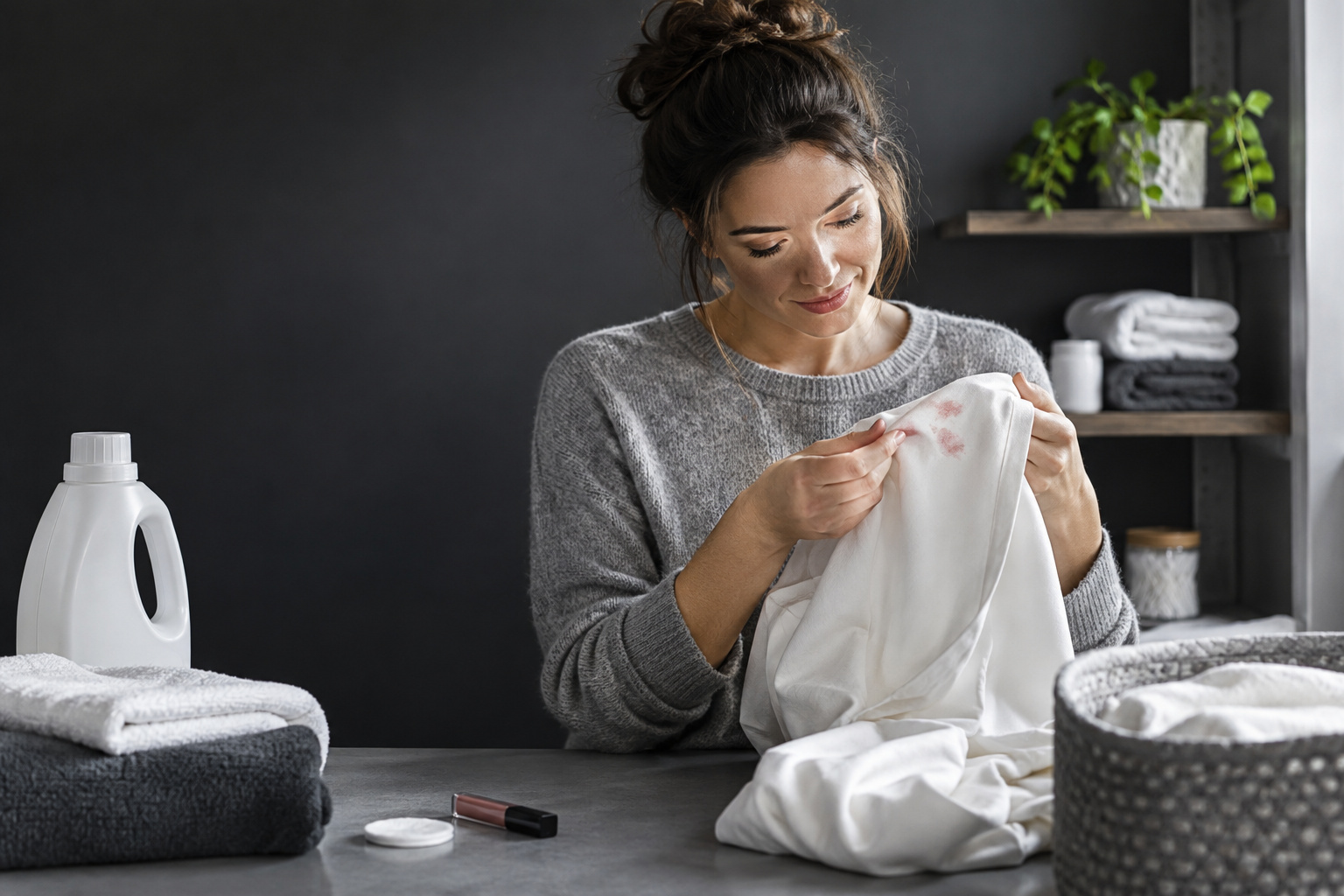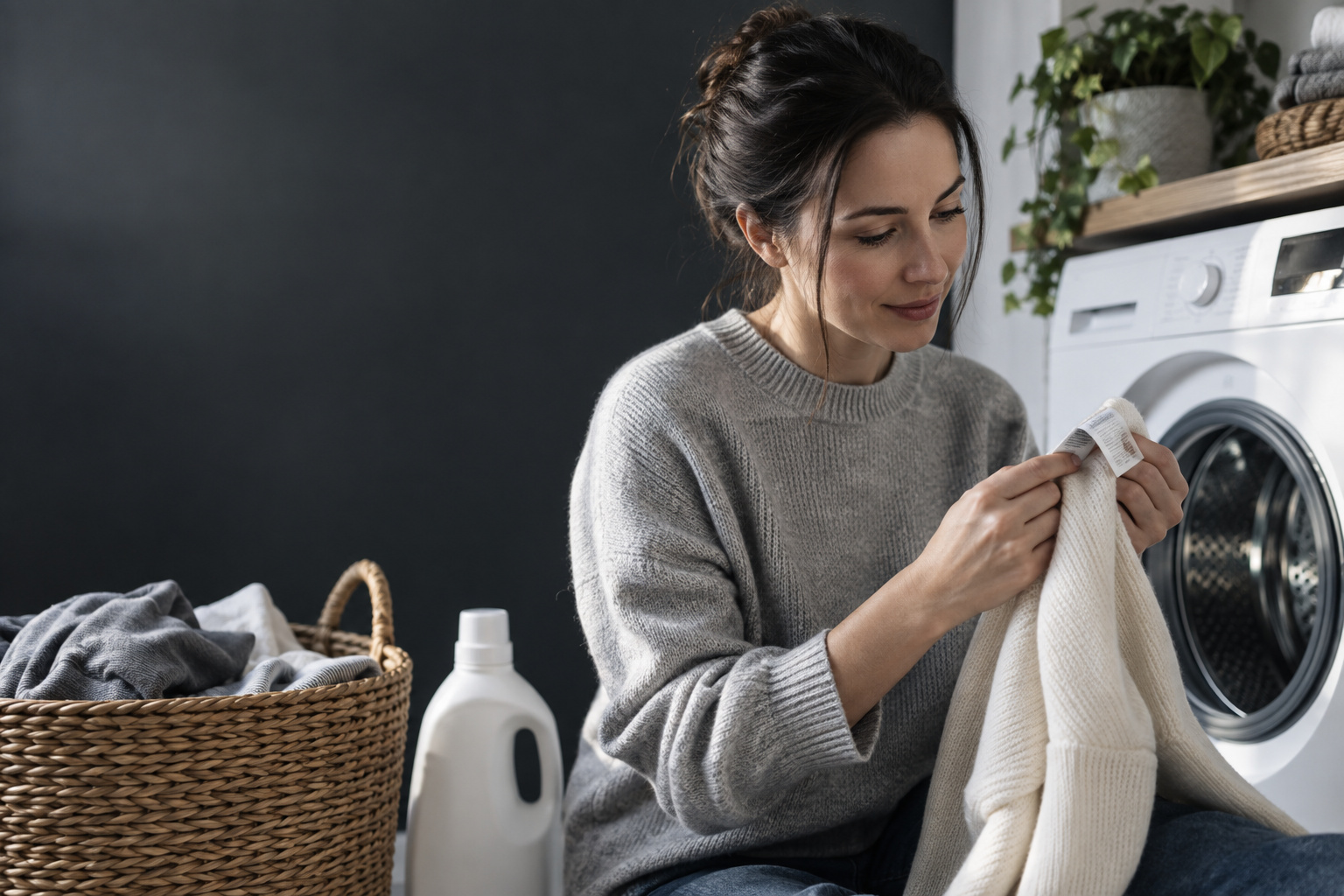
A valuable garment can be damaged by a well-intended rescue. Delicate fabric, structured construction, trims, and professional-care instructions change the decision before any stain remover is chosen. The useful objective is to preserve options. Sometimes that means a careful, supported home treatment; sometimes it means keeping the garment untreated and giving a cleaner a clear account of what happened.
Separate delicate from dry-clean-only
Delicate is a broad description of how an item may need to be handled. Dry-clean-only is a specific care restriction. Do not treat them as interchangeable, and do not assume that all garments made from a particular fiber share the same care route. Inspect the complete care label, lining, trim, decoration, and structure before deciding what kind of advice applies.
The FTC care-label guidance explains that manufacturers provide substantiated regular-care instructions and relevant warnings. It also recognizes that some garments carry more than one supported care method. Read the actual wording instead of inferring a second method from the fiber content. Our care-label guide helps turn that wording into clear limits for water, washing, bleaching, and drying.
Make the first response informational
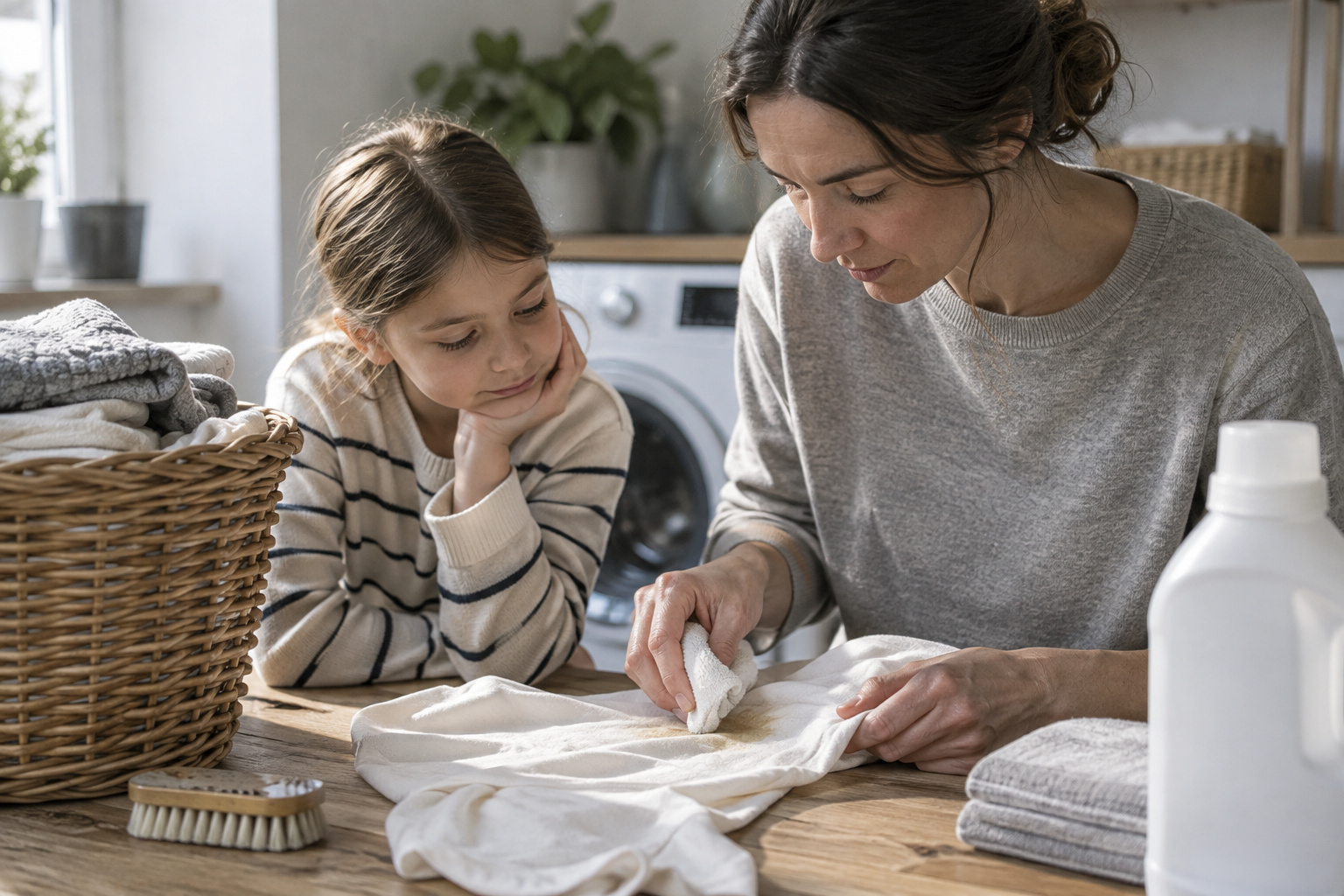
Note the stain source, time, location, and approximate area. If a specific cosmetic, pen, food, or drink caused it, retain the packaging or write down the name. Take a simple photograph in ordinary light for your own record. That is useful when the appearance changes or when you need to explain the event without repeatedly handling the affected area.
Avoid rubbing the mark or applying a household remedy while deciding what to do. If there is loose surface residue, remove it only if that can be done without pressing, scraping, or disturbing the material. Otherwise leave it for assessment. Do not wet a dry-clean-only garment just because the spill is small. A small stain does not make an unsupported treatment compatible.
Know what a home spot test cannot authorize
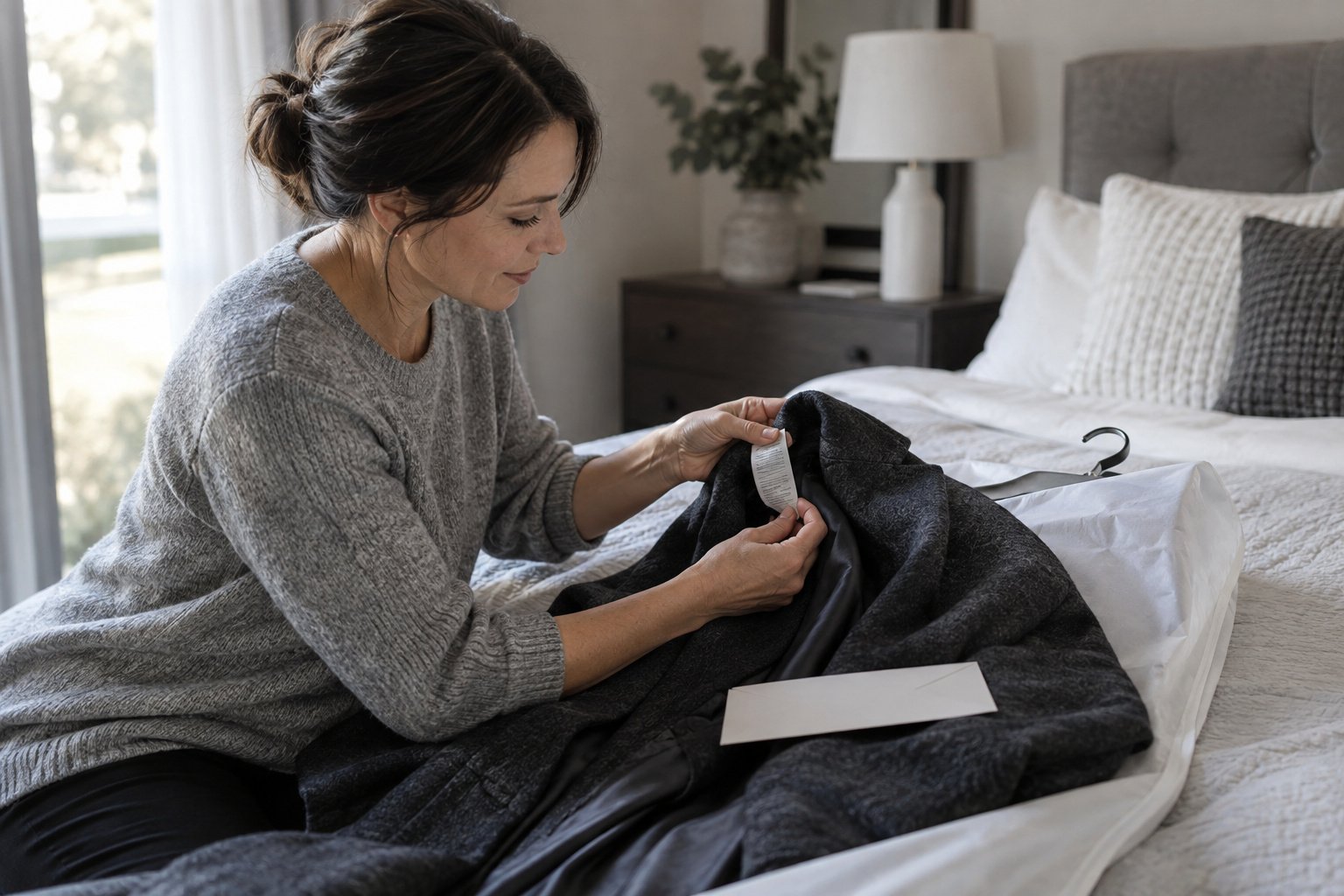
For a delicate item whose care instructions actually permit a chosen home treatment, read the product label and carry out its material spot test on a hidden representative area. Check for dye transfer, texture change, fading, and altered sheen after the prescribed rinse and drying. Do not test on an unrelated lining and assume the visible face of the garment is covered.
A hidden-area test does not override a dry-clean-only instruction or a product exclusion. Laundry-tool references on this page are not permission to scrub, soak, or machine wash this garment. Even a mesh laundry bag is only an option for an item whose care label permits the intended washing method; it does not make a dry-clean-only item washable. It also does not prove that all trims, seams, and finishes will respond identically. If no suitable test area exists, pause. For an important garment, the absence of an obvious reaction on a tiny hidden patch is too weak a basis for a large, unsupported treatment.
Prepare a clear handoff to a professional
Tell the cleaner what caused the stain, when it occurred, whether it dried, and every treatment already applied. Include ordinary products such as detergent or a household wipe; do not omit them because they seemed mild. Bring relevant care information and ask what result is plausible, what risks remain, and whether the treatment may change the appearance.
Ink and makeup benefit particularly from product identification. The ink and makeup guide explains why a generic stain description is insufficient, and the ACI stain guide notes that some inks may not be removable. A professional assessment is not a guarantee of complete removal. The goal is an informed decision based on the actual garment rather than a promise made before anyone has examined it.
Avoid the strongest common shortcuts
Do not assume that plain water, steam, dish soap, alcohol, oxygen bleach, or a natural ingredient is compatible with a delicate item. Each proposed method still needs support from the garment and product instructions. The bleach exclusions guide explains why a broad product category cannot answer the compatibility question. Never use a strong treatment simply because a weaker-looking one failed.
Never mix cleaning products. The Washington Department of Health warns that bleach can react dangerously with acids, ammonia, and other cleaners. Do not attempt to neutralize an earlier treatment with a different household chemical. If you have already used something, stop and document it. Honest disclosure is much more helpful to the next person handling the garment than trying to erase evidence of the first attempt.
Decide what outcome is acceptable before treatment
Consider the garment's role, replacement difficulty, sentimental importance, and visibility of the mark. You may accept a faint residual stain on an everyday item but prefer a specialist assessment for a formal garment. State your priorities clearly. A request to reduce the mark while preserving the finish is different from asking for removal regardless of risk.
After any supported care, inspect the garment before further treatment or heat. Compare the stained area with the surrounding material, including texture and shape. Do not repeat treatment automatically because a trace remains. Keep the cleaner's advice and your treatment record with the garment's care information for future reference. The successful outcome is a decision you can explain and a garment handled within known limits, even when complete stain removal is not possible.