
A muddy knee can contain loose soil, a grass mark, and fabric abrasion in the same small area. A single aggressive scrub treats all three as if they were removable dirt. A better approach separates what you can gently remove from what needs a labeled laundry treatment, while watching for damage that cleaning will not repair. Start with the actual garment rather than the activity that caused the stain.
Map the mark before wetting the whole garment
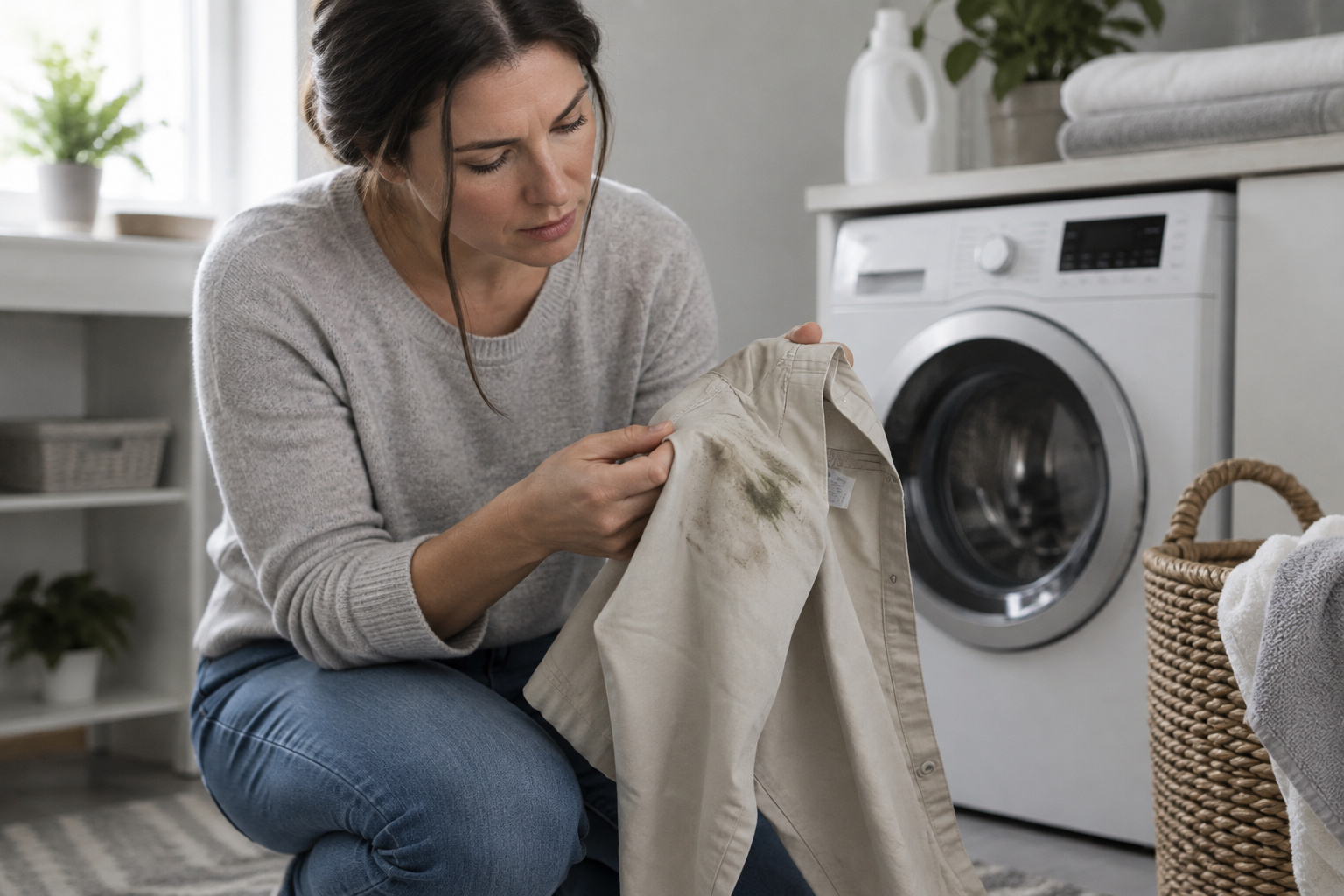
Lay the clothing where you can inspect it without transferring dirt to a clean surface. Identify loose mud, a green or brown stain, and any roughened or torn fabric. Note whether the garment is everyday clothing, a uniform, or specialized outdoor wear. A grass-stained trouser knee may also have abrasion; a stain remover cannot restore fibers that have been worn away.
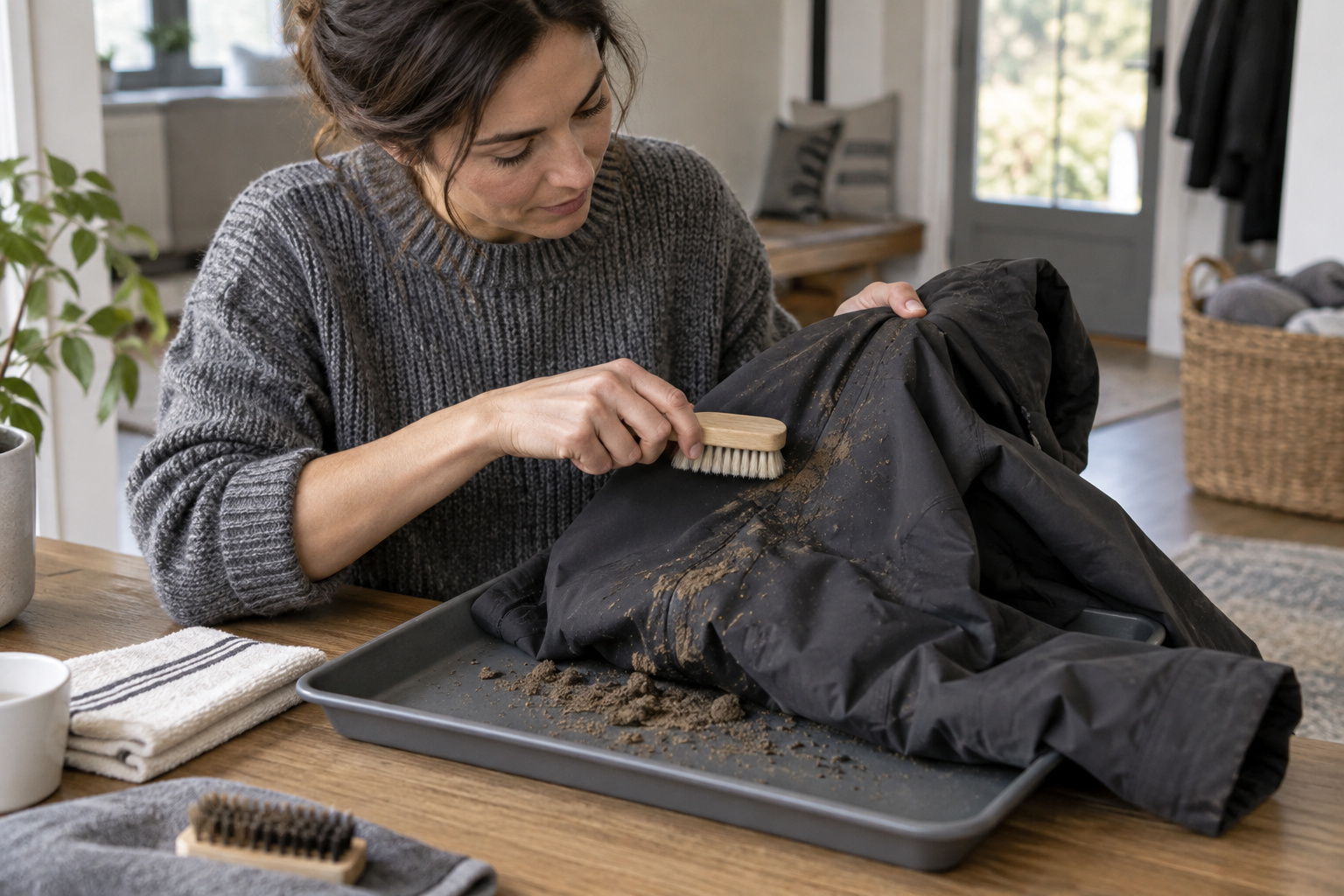
Lift loose dry surface debris gently if the fabric allows handling, without grinding it into the textile. Do not force a stiff brush across stretchy panels, decorative stitching, or damaged areas. If mud is still wet, avoid spreading it with repeated wiping. The purpose of this first inspection is to see what you are dealing with, not to complete the cleaning through mechanical force.
Read sportswear and outdoor-care restrictions carefully
Check the care label on each item, including any instructions that relate to coatings, printed numbers, reflective details, or trims. Similar-looking uniforms can have different restrictions. Read the stain-remover label too and conduct its material spot test in a hidden representative area. The care-label guide explains why testing an unrelated lining does not clear the visible fabric for treatment.
The FTC care-label guidance requires relevant instructions and warnings for regular garment care. Work inside those limits. If the manufacturer gives special washing instructions for outdoor equipment, follow them instead of applying a household-clothing routine by analogy. A claim that a product treats grass does not establish that it preserves every finish used on technical clothing.
Treat the grass component with a supported product
The American Cleaning Institute recommends an enzyme-containing pretreatment or soak for grass stains. Investigate that option only if the garment and product labels support it. The stain category is a useful search criterion; it is not proof that a specific formula is compatible or will remove the mark. Review the enzyme stain remover guide before choosing among products.
Apply the selected treatment according to its instructions, including the contact time and next washing step. Do not automatically soak an entire garment because a localized treatment was mentioned in a general guide. Keep the method limited and observable. Stop if a spot test shows color loss, a finish change, or another adverse response. A protected-looking label claim is less useful than clear instructions for the actual textile.
Keep mud, color, and fabric wear separate in the assessment
After the permitted wash, examine what remains. Loose dirt may be gone while a colored mark remains, or the area may look pale because the material has been scuffed. Compare the texture as well as the color with an unaffected section. Do not conclude that a lighter knee simply needs a stronger stain remover; removing garment dye would make that outcome worse.
For team uniforms or children's clothing, make a short note of repeated problem areas and the treatment used. That helps distinguish a recurring stain from ongoing fabric wear. It also helps another household member avoid repeating the same unsuccessful treatment. If the garment manufacturer cannot support a next step, accepting a cosmetic mark on outdoor clothing may be a better decision than sacrificing the item.
Do not turn a laundry session into a product mixture
Choose a single supported treatment route rather than adding several boosters, household acids, or bleach. The Washington Department of Health warns that bleach reacts dangerously with ammonia, acids, and other cleaners. Never mix cleaning products or make a homemade mixture, including directly on the fabric. Keep products in their original containers and use their own application directions.
If a persistent grass mark makes you consider bleach, start with the oxygen and chlorine bleach guide. ACI discusses bleach options subject to fabric suitability, which is a condition rather than blanket permission. Garment restrictions, the product's exclusions, and a suitable hidden-area test must all be considered. Neither a white uniform nor a color-safe marketing phrase resolves the compatibility question by itself.
Inspect before drying and plan the next outdoor wash
The ACI recommends repeating supported stain treatment if necessary and avoiding dryer heat while a stain remains. Follow the garment's drying restrictions and reassess the affected area in useful light. If another treatment is permitted and the fabric is unchanged, a controlled repeat may be reasonable. If there is no improvement, change the decision rather than automatically increasing intensity.
The set-in stain guide helps with clothing that has already been washed and dried. For future outdoor loads, make the inspection step part of sorting: identify the garment, check the label, note visible stains, and tell whoever handles the next wash what happened. A consistent routine is more transferable than a universal grass-stain recipe, because the next garment may have a completely different material or finish.