Red wine is one of the stains people most want to act on immediately, and that instinct is right: extension guides agree that fresh stains are easier to remove than old ones. The difficulty is that the fastest-sounding home remedies are not what the published guides recommend. This article follows the American Cleaning Institute’s wine entry and Texas A&M AgriLife Extension’s method for wet and tannin stains, then checks every bleach step against the Federal Trade Commission’s care-label wording. It is written for washable clothing; anything labeled for professional care is out of scope.
How do you get red wine out of clothes? The short answer
Short answer To get red wine out of washable clothes, sponge the stain with cool water or soak it in cool water for about 30 minutes, pretreat with a prewash stain remover, then launder. The American Cleaning Institute adds chlorine bleach to the wash only if it is safe for the fabric; check the care label first and inspect the garment before drying.
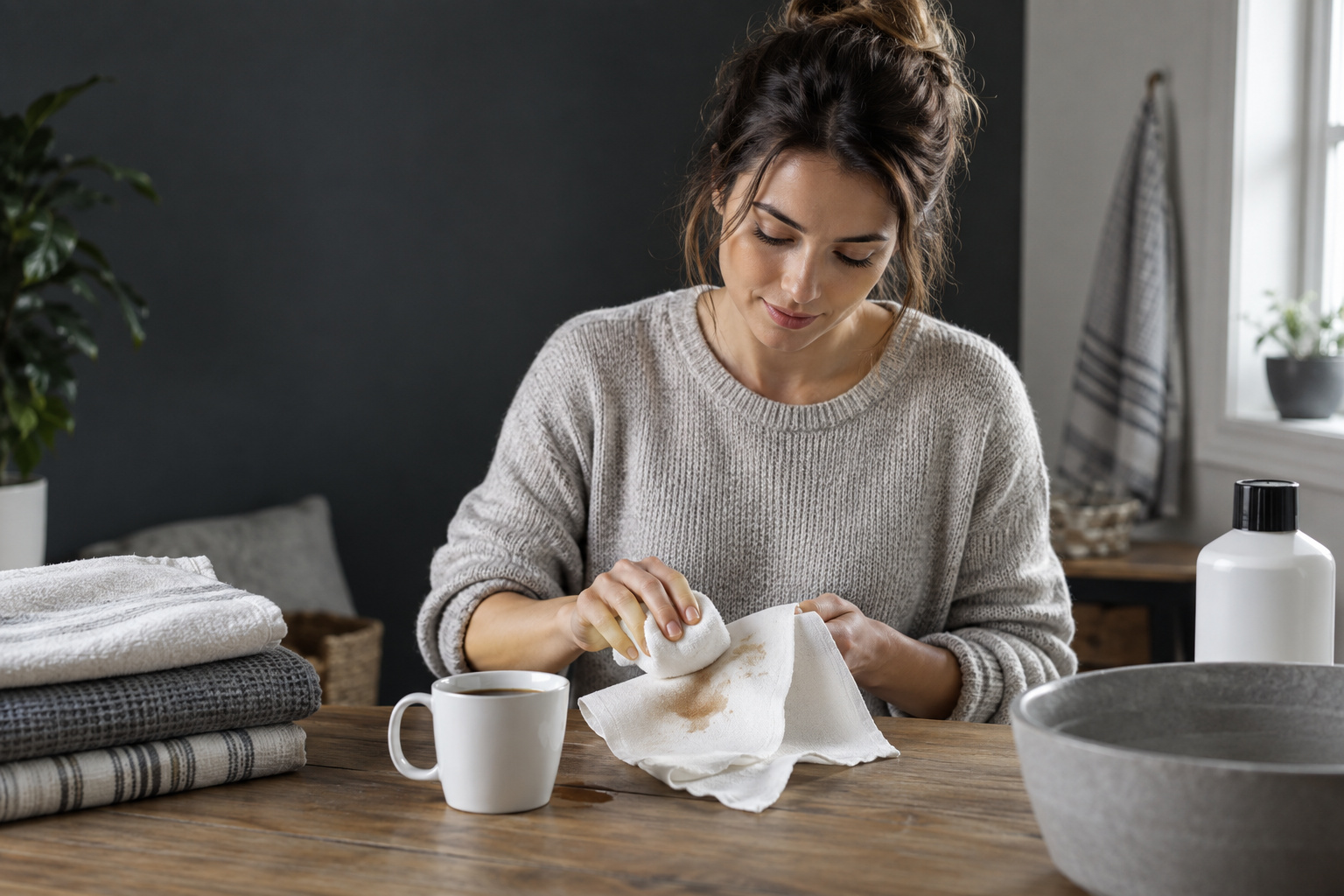
The American Cleaning Institute (ACI) gives a three-step wine routine: “Sponge the stain with cool water or soak it in cool water for about 30 minutes. Pretreat with a prewash stain remover. Launder; if safe for the fabric, add chlorine bleach to the wash.” Texas A&M AgriLife Extension classifies wine as both a wet-type and a tannin stain, which leads to the same sequence: cool water first, detergent next, a hot-enough wash, and inspection before heat.
- Cool water first: sponge or soak about 30 minutes (ACI).
- Pretreat: a prewash stain remover, following its label (ACI).
- Wash: the hottest water the care label allows (Texas A&M, tannin stains).
- Bleach only if permitted: chlorine bleach only when the care label allows it (ACI, FTC).
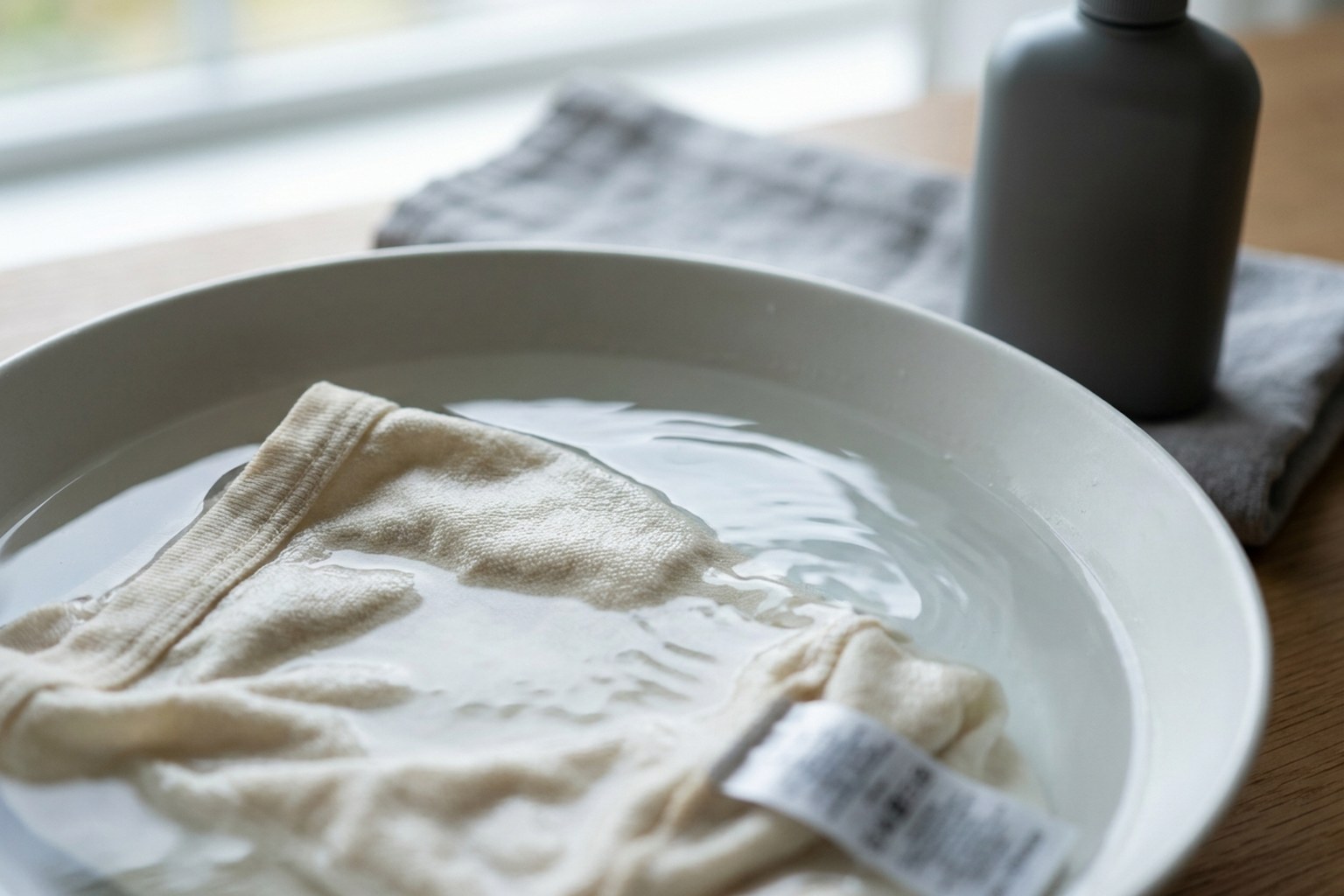
Why cool water comes first
Texas A&M’s method for wet-type stains starts by dissolving the stain with cool water: “Lubricate the stain with detergent solution or wet spotter to penetrate and loosen the stain; sponge or tamp. Flush with cool water. Repeat until no more stain is removed.” Starting cool keeps the first step gentle and avoids introducing heat before you know what the stain will do.
Texas A&M also lists general rules worth keeping in mind at the table: “Treat stains quickly. Old stains may be impossible to remove,” and “Old remedies … are unreliable. The remedy may produce an additional stain.” That is a good reason to skip improvised toppings and go straight to water and a labeled pretreatment, the same cautious approach as our fresh coffee and tea stain guide, since tea and coffee are also tannin stains in the Texas A&M index.
- Blot, then flush: lift excess liquid, then sponge or flush with cool water.
- Work from the back: where the fabric allows, so the stain is pushed out rather than through.
- Keep it wet: a stain that dries before treatment is harder to move.
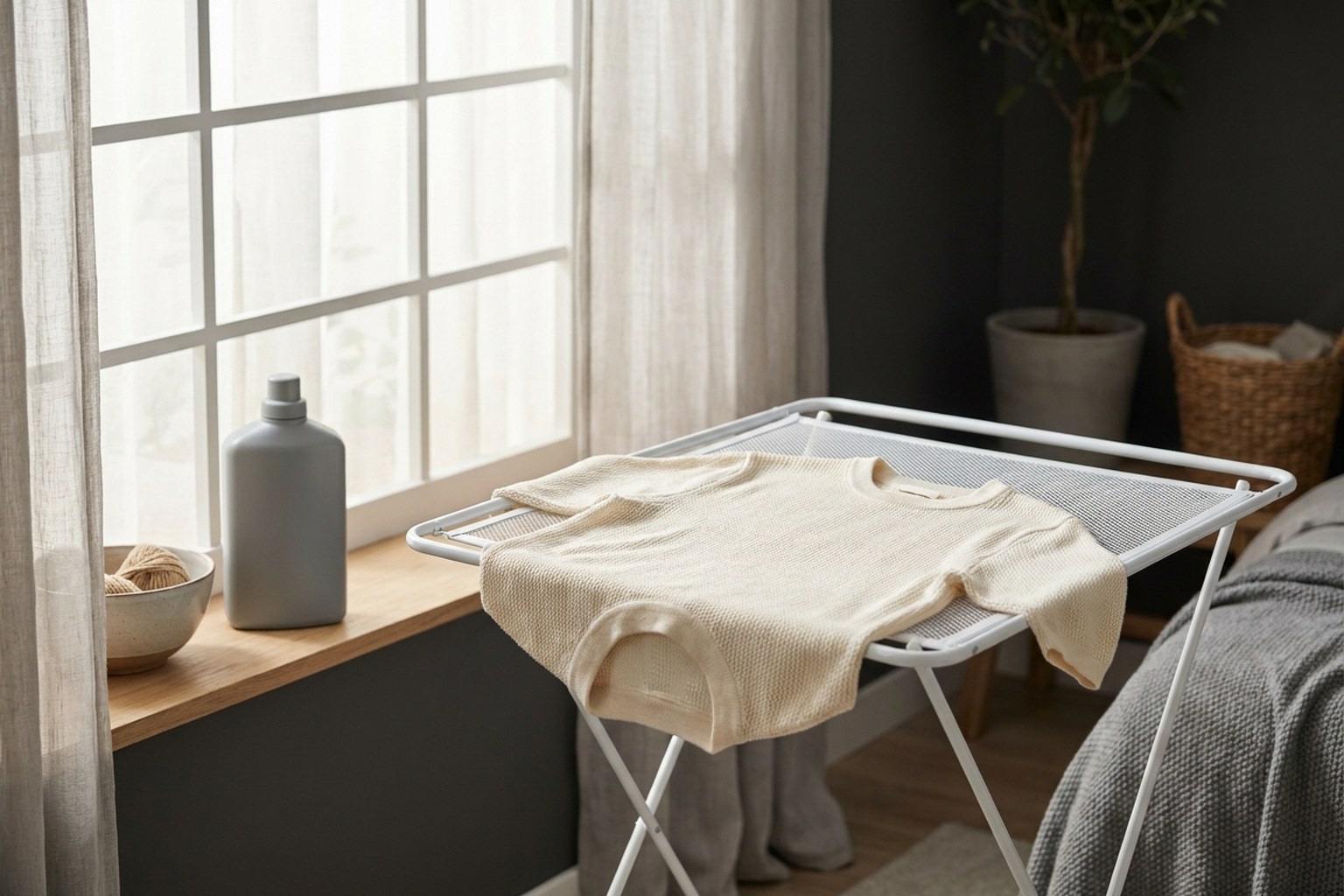
Pretreat and wash: the tannin-stain sequence
After the wet-stain steps, Texas A&M’s instructions for tannin stains continue: “work full-strength liquid detergent into the stain. Wash using hottest water safe for the fabric and the recommended amount of detergent. Inspect before drying.” If the stain persists, it suggests re-laundering using recommended amounts of detergent “and bleach appropriate for the fabric.”
| Step | What to do | Why | Source |
|---|---|---|---|
| 1 | Sponge or soak in cool water, about 30 minutes | Dissolve and dilute the wet stain | ACI, Texas A&M |
| 2 | Pretreat with a prewash stain remover or full-strength liquid detergent | Loosen the tannin stain | ACI, Texas A&M |
| 3 | Launder in hottest water safe for the fabric | Remove loosened stain | Texas A&M |
| 4 | Inspect before drying | Heat sets stains | Texas A&M |
| 5 | If permitted, re-launder with a bleach appropriate for the fabric | Final traces | ACI, Texas A&M, FTC label rules |
Pretreatments for this step, from sprays to sticks, are compared on our fabric stain remover comparison. For a spill away from home, the portable stain pen comparison covers pens whose labels describe on-the-go use; follow up with the full sequence once you are back at a sink.
When is bleach safe on a wine stain?
ACI’s instruction is conditional: add chlorine bleach to the wash only “if safe for the fabric.” Texas A&M lists where chlorine bleach does not belong: “Do not use them on wool, silk, polyurethane foam, spandex or blends of these fibers; on finishes which are embossed or flame retardant; or on fabrics labeled no chlorine bleach.”
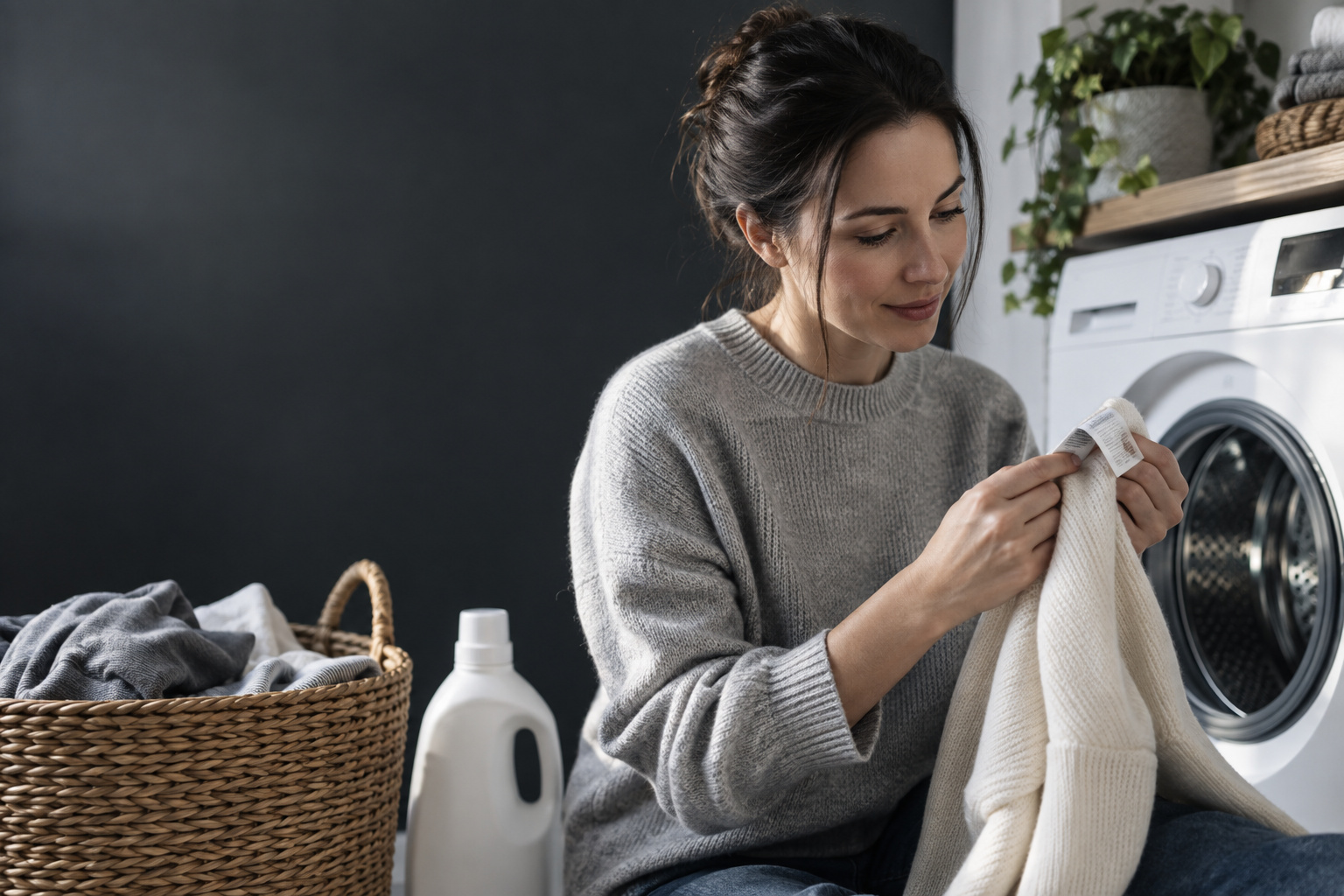
The care label tells you which case you are in. Under the FTC Care Labeling Rule, “Only non-chlorine bleach, when needed” rules out chlorine bleach, and “No bleach” or “Do not bleach” rules out all bleaches. Texas A&M describes a colorfastness test for liquid chlorine bleach in its guide; follow that test and the bleach package directions exactly, without additions.
- Wool, silk, spandex or blends: no chlorine bleach (Texas A&M).
- “Only non-chlorine bleach, when needed”: chlorine bleach is excluded by the label (FTC).
- “No bleach” / “Do not bleach”: no bleach of any kind (FTC).
- Never combine: do not mix bleach with ammonia, vinegar or other cleaners (Washington State Department of Health).
Keep every product separate. Washington State Department of Health warns: do not mix bleach with ammonia, acids or other cleaners, and it lists vinegar among the acids. Mixing bleach and ammonia produces toxic chloramine gases. The oxygen vs chlorine bleach guide explains the label exclusions in more detail.
Common red wine mistakes the guides warn against
Most failed wine-stain attempts come from adding heat or chemistry too early. The cited sources point to a few habits to avoid, each tied to a stated reason.
- Hot water first: Texas A&M starts wet-type stains with cool water; heat comes only at the wash stage and only within the label limit.
- Home remedies: Texas A&M calls old remedies unreliable and notes that a remedy may produce an additional stain.
- Waiting until tomorrow: old stains may be impossible to remove, so at least a cool-water rinse on the day helps.
- Bleach by default: ACI makes chlorine bleach conditional on the fabric, and the FTC label wording can exclude it.
- Drying to check: heat sets stains; inspect damp, then air-dry if in doubt.
If you are unsure which pretreatment type suits the fabric, the site’s stain treatment selector walks through fabric and stain questions before pointing to a product category.
Inspect before the dryer, and what to do if a mark remains
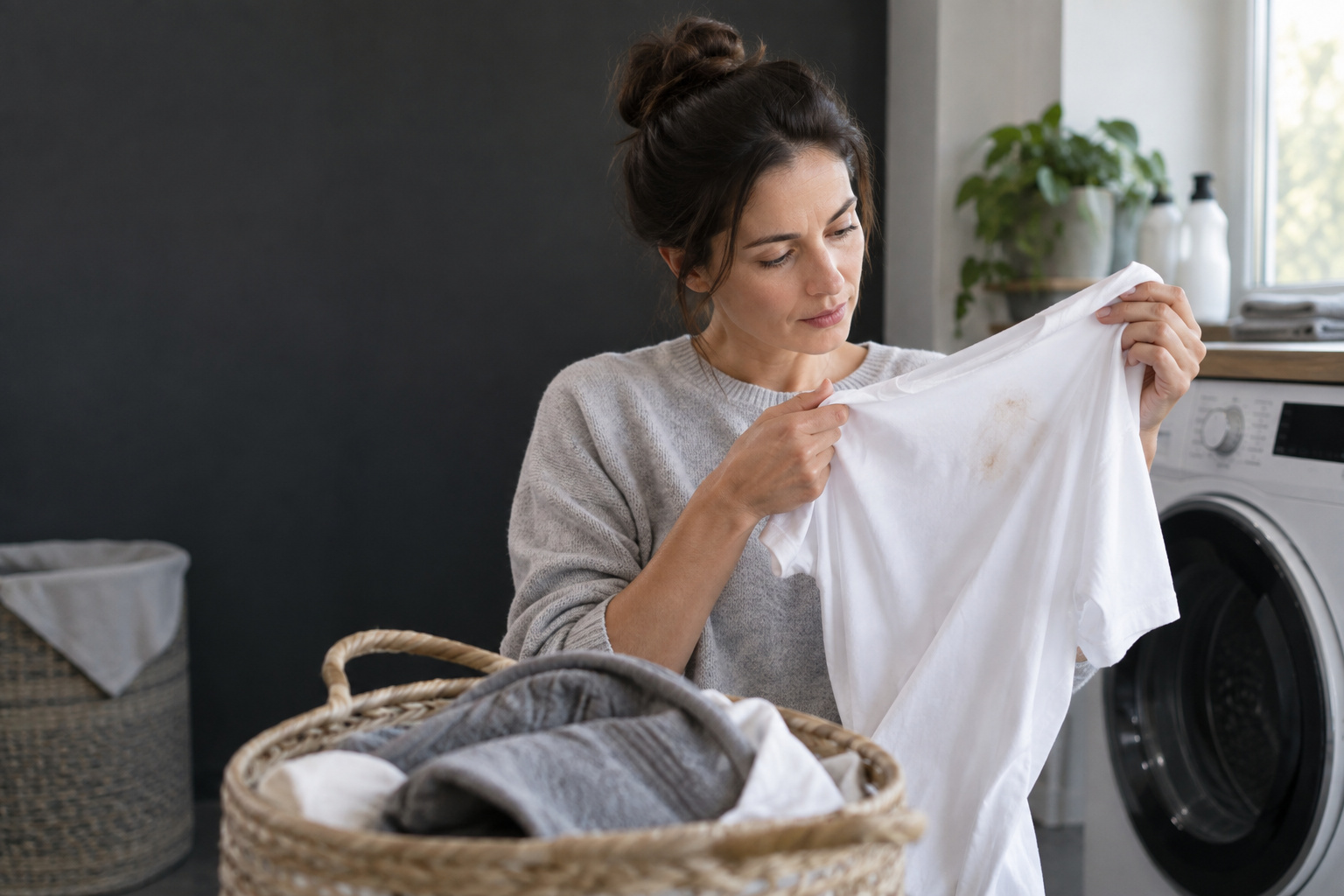
Texas A&M’s rule is unambiguous: “Heat sets stains. Do not dry a stained fabric in the dryer or press it until you are sure all of the stain has been removed.” Look at the stained area in daylight while the garment is still damp. If any pink or gray outline remains, air-dry it and decide whether another permitted cycle has a purpose.
- Outline visible, never dried: repeat the pretreat-and-wash steps once, within the label limits.
- Already through the dryer: expectations should drop; see the set-in stain guide.
- Delicate or dry-clean-only: do not start a home routine; read the delicates guide and tell the cleaner what was spilled.
Wine stains are a good test of patience. The cited guides favor a short, repeatable sequence—cool water, a labeled pretreatment, the right wash temperature and an inspection—over stronger chemistry, and they are honest that some stains, especially old ones, will not fully come out.