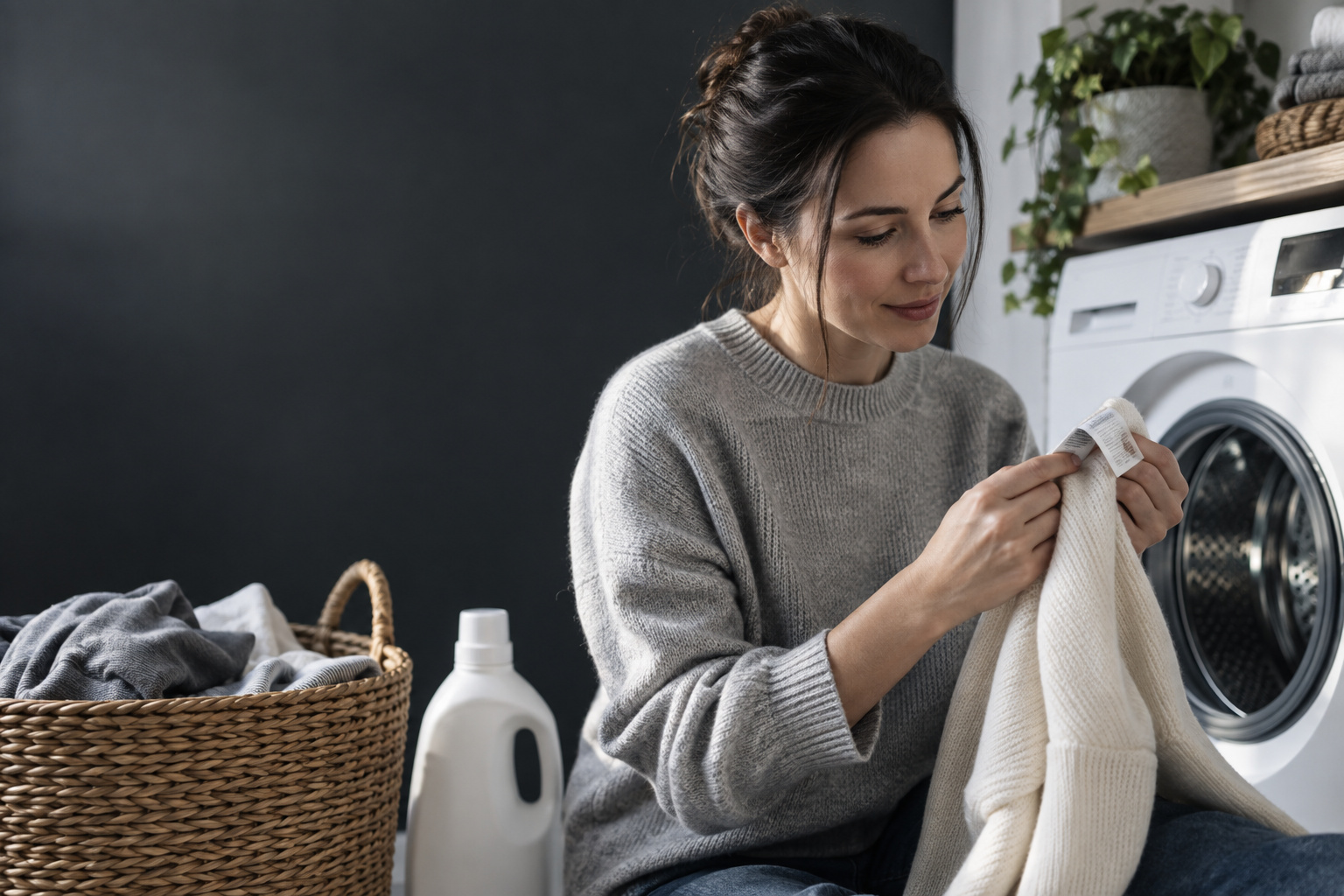
Deodorant and antiperspirant marks are usually white, chalky or stiff, and they tend to sit on the underarm seam of dark shirts and the side panels of tops. They are a different job from yellow sweat rings, even though the two often appear on the same garment. This guide uses the American Cleaning Institute’s light-versus-heavy instructions, a Texas A&M AgriLife Extension note on why some residue never comes out, and the Federal Trade Commission’s care-label rules for bleach. It sticks to what those sources state and leaves product claims to the product label.
How do you remove deodorant stains? The short answer
Short answer To remove deodorant stains, pretreat light marks with liquid laundry detergent and wash as usual; for heavy marks, apply a prewash stain remover, let it stand 5 to 10 minutes and launder with an oxygen bleach if the care label permits bleach. Texas A&M AgriLife Extension warns that residues of aluminum or zinc salts may be impossible to remove.
The American Cleaning Institute (ACI) splits deodorant stains into two cases. For light stains: “Pretreat with liquid laundry detergent. Launder.” For heavy stains: “Pretreat with prewash stain remover. Allow to stand for 5 to 10 minutes. Launder using an oxygen bleach.” Texas A&M AgriLife Extension gives the light-stain route in similar words: apply liquid detergent to stains and launder in warm water using the recommended amount of detergent.
- Light, recent marks: liquid laundry detergent worked into the area, then a normal wash (ACI, Texas A&M).
- Heavy, built-up marks: prewash stain remover, 5 to 10 minutes standing time, then a wash with oxygen bleach (ACI).
- Before any bleach: confirm the care label allows it; the care-label guide shows what to look for.
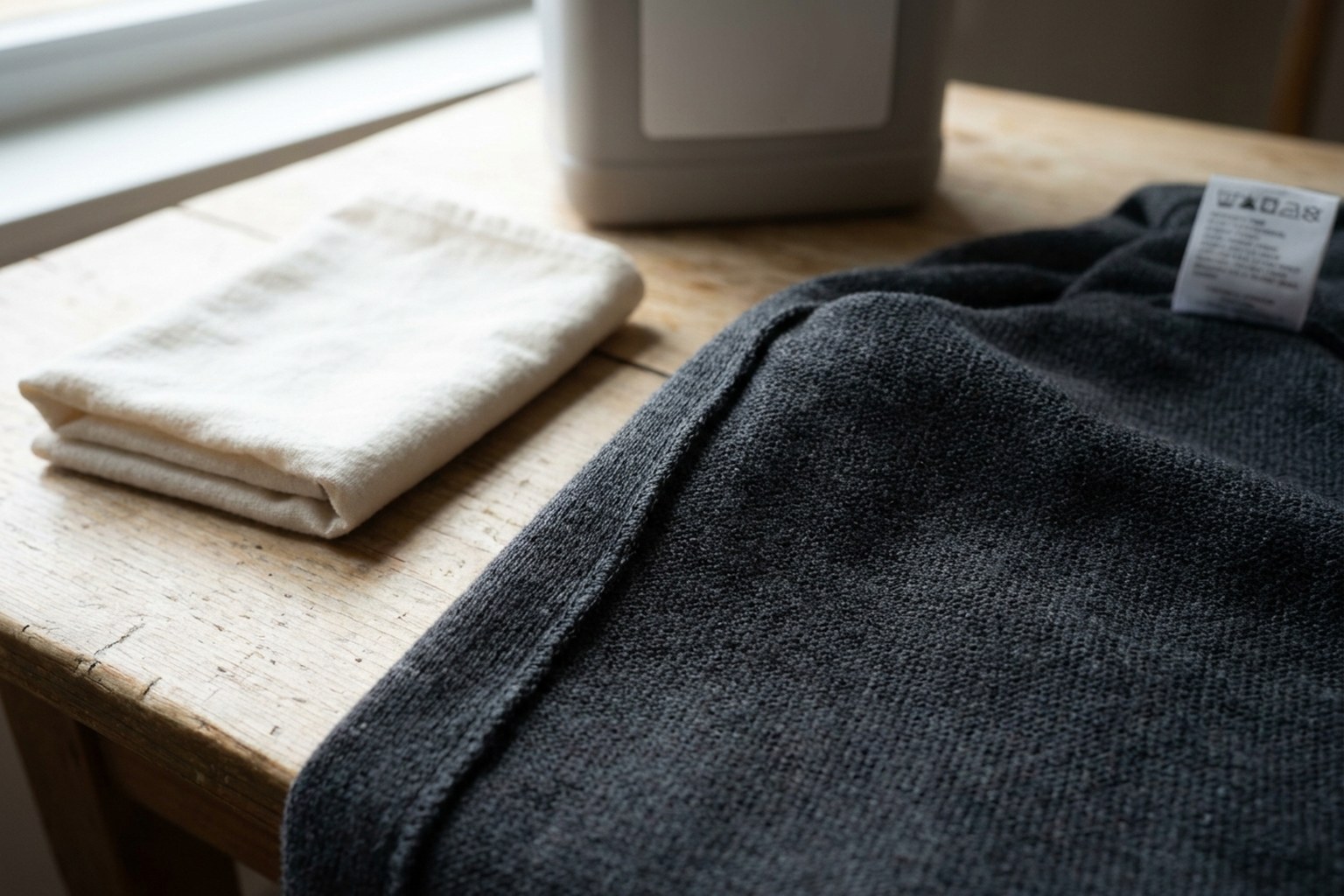
Light vs heavy deodorant buildup: which route applies?
The distinction matters because the heavy-stain route adds two things a light mark does not need: a dedicated stain remover with standing time, and an oxygen bleach in the wash. Using the stronger route on a fresh smear adds a product to the garment without a stated reason.
| Mark | Pretreatment | Wait | Wash | Source |
|---|---|---|---|---|
| Light stain | Liquid laundry detergent | Not specified | Launder (Texas A&M: warm water, recommended detergent) | ACI, Texas A&M |
| Heavy stain | Prewash stain remover | 5–10 minutes | Launder using an oxygen bleach | ACI |
| Aluminum or zinc salt residue | As above | — | May be impossible to remove | Texas A&M |
A useful rule of thumb from the same guides: treat promptly. Texas A&M notes that old stains may be impossible to remove, and repeated wears let residue accumulate. Pretreatment products for this step are compared on our fabric stain remover comparison.
Can you use oxygen bleach on deodorant stains?
ACI names oxygen bleach for heavy deodorant stains, and Texas A&M describes oxygen bleaches as “usually safe for all fabrics and colors,” with an exception: “Do not use on fabrics with flame retardant finishes.” It also notes that powdered bleach packages carry directions for colorfastness tests. Those directions, not a general rule, govern your garment.
The care label has the final word. Under the FTC Care Labeling Rule, a garment that would be harmed by chlorine bleach but not by non-chlorine bleach must say “Only non-chlorine bleach, when needed,” and a garment that all bleaches would harm must say “No bleach” or “Do not bleach.”
- Label says “No bleach”: skip oxygen bleach entirely; use detergent and a permitted pretreatment only.
- Label says “Only non-chlorine bleach, when needed”: an oxygen bleach may be considered, following its package directions.
- No bleach instruction: the FTC rule allows silence when all commercially available bleaches can be used regularly, but still read the product label.
- Flame-retardant finish: Texas A&M says not to use oxygen bleach on it.
Our oxygen vs chlorine bleach guide covers the category differences in more depth. Oxygen boosters are ranked separately on the laundry booster comparison.
Why some antiperspirant residue never fully comes out
Texas A&M is direct about the limit: “Residues of aluminum or zinc salts may be impossible to remove.” That sentence is worth reading before a third or fourth attempt. Repeating a treatment does not change what the fabric has absorbed, and each extra cycle exposes the garment to more handling and chemistry.
Deodorant marks often sit next to perspiration discoloration. If the remaining mark is yellow rather than white, it is a different stain with a different route; follow the enzyme stain remover guide (yellow perspiration marks are a protein-type stain) for that part rather than escalating the deodorant steps.
- Reasonable second attempt: a stain was visible before drying and the garment was air-dried; repeat the same permitted route once.
- Unlikely to help: repeated cycles on a stiff, long-standing buildup that already survived a heavy-stain route.
- Out of scope: garments labeled dry-clean only; see the dry-clean-only guide.
Deodorant stain checklist before you start
Before choosing a route, spend a minute on four checks. They take less time than a second wash and they keep the treatment matched to the garment rather than to the stain alone.
- Read the label: washing method, maximum temperature and any bleach instruction; the FTC rule requires a temperature setting when hot water would harm the item.
- Name the mark: white, chalky or stiff residue is the deodorant route; a yellow ring is the perspiration route.
- Judge the buildup: a single recent smear is a light stain; a stiff patch built up over many wears is a heavy stain in ACI terms.
- Pick one product: liquid detergent or one prewash stain remover; read its label for fabric exclusions and standing time.
Writing down which route you used, and whether the garment went through the dryer, makes any later decision easier. That habit is part of the enzyme stain remover guide too, which recommends describing the stain before buying anything.
Safety: one product at a time, never mixed
Deodorant stain advice sometimes drifts into combining household products. Do not. Keep every product separate. Washington State Department of Health warns: do not mix bleach with ammonia, acids or other cleaners, and it lists vinegar among the acids. Mixing bleach and ammonia produces toxic chloramine gases. Utah State University Extension gives the same warning: “Be careful not to mix ammonia with a bleach product as it can produce a harmful gas.”
ACI itself, in its pine resin entry, adds a parenthetical that applies to every laundry step: “Never mix chlorine bleach and ammonia - the resulting fumes are hazardous.” Keep products in their original containers, follow each label separately, and rinse between steps.
- One product per step: pretreat, then wash; do not stack extra products onto the same spot.
- Original containers: keep the product label with the product so its directions remain available.
- Ventilation: work with a window open or a fan running when using any cleaning product.
Inspect before drying
The checkpoint is the same as for any stain: Texas A&M advises not to dry a stained fabric in the dryer or press it “until you are sure all of the stain has been removed,” because heat sets stains. Check the underarm area in good light while the garment is damp, and air-dry it if any outline remains.
If the mark is gone, dry as the care label directs. If a faint outline remains after a heavy-stain route, the set-in stain guide helps decide whether one more attempt is worth it. For sensitive-skin households that prefer unscented products, our fragrance-free stain remover ranking lists options whose exact listings state fragrance-free wording.
Sources and further reading
- American Cleaning Institute: Stain Removal Guide
- Texas A&M AgriLife Extension: Removing Stains From Washable Fabric (PDF)
- Federal Trade Commission: Clothes Captioning and the Care Labeling Rule
- Washington State Department of Health: Bleach Mixing Dangers
- Utah State University Extension: Home Cleaning Chemistry